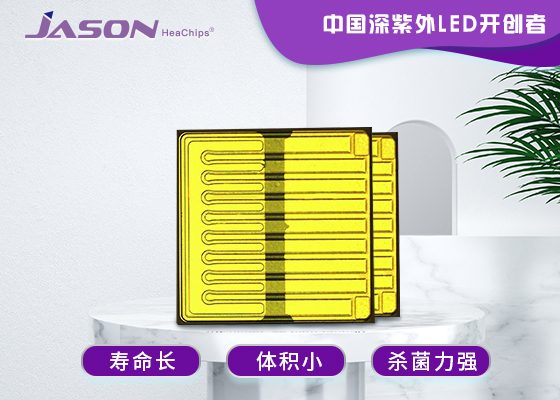
Catalogue chip models
The chip category of the company's product centre lists the VF series as its current named models. On the company's own product pages, per-model parameters are presented as specification images; which figures are recorded for a given model, and in what form they can be supplied, is established in the enquiry exchange for the exact model and band you name.
| Model | Form | Notes |
|---|---|---|
| VF-40v | Bare chip die | Catalogued chip model; ask what band and ratings are documented for this model |
| VF-20W | Bare chip die | Catalogued chip model; ask what band and ratings are documented for this model |
| VF-20r | Bare chip die | Catalogued chip model; ask what band and ratings are documented for this model |
Shop by wavelength
295 NM
295 nm LED Chips
Listed in the company's published wavelength keywords, inside the published 255–340 nm range.
340 NM
340 nm UV LED Chips
The longest wavelength in the published chip range — the endpoint of the 255–340 nm span.
295 · 310 NM
LED Chips at 295 and 310 nm
Two named bands collected on one page: 295 nm, listed without a named application, and 310 nm for phototherapy.
CUSTOM
Custom Wavelength Runs
Non-standard bands inside 255–340 nm, quoted per project against a named target band.
What to settle when buying bare die
Bare-die buying turns on records. Whether wavelength binning, forward-voltage spread and output grading are recorded for a given model — and what those records show — is established per model in the enquiry exchange, for the named model rather than assumed. The catalogue's custom service — chips and wavelength runs outside the standard list — is quoted per project against a named target band.
What a chip enquiry names
- The band. Name the target band and its tolerance in the enquiry.
- The format. State whether the design builds with bare die or a packaged device; which form a band is supplied in is established per model in the enquiry exchange — the packaged devices are the other form family.
- Grading. Ask which output and wavelength bin records exist for the chosen model — what is recorded for a given model is established in the enquiry exchange rather than assumed.
Do you publish full datasheets online?
Name the model or band you are targeting in your enquiry: whether parameters are recorded for that exact model, and in what form they can be supplied, is established in the exchange.
Reading the range like a process engineer
Two numbers define the range. The first, 255–340 nm, is the published span of the company's chip catalogue. The second number is 260–320 nm, the span the company publishes as its main production range. The company's published catalogue figure — more than 1,000 standard chip models — is a catalogue-wide total; this page does not break that total down by band. Bands at the edges of the range are catalogue items in their own right, with supply confirmed per model like any other; a programme planning very large volumes at 255 nm or 340 nm should open the capacity conversation early, through the same enquiry route.
Request a quotation
Tell us the wavelength, package format and quantity you are sourcing. Minimum order quantities and lead times are confirmed per product line in the quotation, against the named model and the quantities the enquiry states.
Send an Enquiry