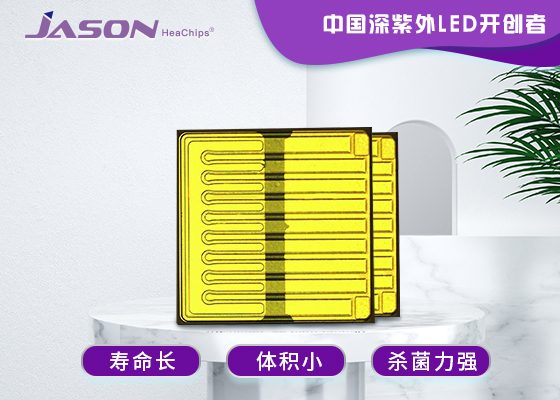
The standard list and the custom service
The standard catalogue lists the named bands from 255 to 340 nm, the VF-series models, and a published total of more than 1,000 standard chip models. A custom run is the route for requirements the standard list does not cover. The company's own catalogue states the offer plainly: chips across 255–340 nm, with custom services alongside the standard range. What a custom run can cover for a given target is scoped per project in the enquiry exchange.
What a custom enquiry needs to name
- Target band: the centre wavelength, inside 255–340 nm, and the tolerance the design can accept.
- Form: bare die, or a named package family the run should feed — the form question is settled in the same exchange.
- Specification anchors: any output class, binning criteria or test conditions the programme's validation assumes, quoted verbatim where they exist.
- Quantities and timing: evaluation quantities, expected production volume and the programme's schedule.
The questions a custom programme turns on — whether the target sits inside the custom service's scope, and what records a run would carry — are established in the exchange, against those four inputs. The four inputs are the buyer's own: the target band, the form, the anchors the programme's validation assumes, and the quantities and timing the programme runs to.
Custom runs and the range edges
Requests at the edges of the range deserve an early conversation. A target near 255 nm or 340 nm is an edge-band programme, and the supply position for it is established per project in the enquiry exchange. The same applies to targets between the named bands — whether the custom service can cover a wavelength the catalogue does not list as a standard band is established per project in the enquiry exchange, rather than inferred from the neighbouring bands.
How custom work is quoted
Custom chip work is quoted per project, against the named target band and the inputs above. Minimum quantities and lead times for a custom run are part of that quotation. Whether evaluation parts are arranged before a production commitment, and on what terms, is confirmed per project in the same exchange, against the named target and the programme's protocol. An enquiry that names the target band, the tolerance, the form and the quantities in its first message gives the exchange the inputs it needs to scope the run against the named target. Ask for the run's scope to be stated against that target in the same exchange — what it covers, the quantities it is priced at and the timing it runs to.
Can a custom run target a wavelength outside 255–340 nm?
The published range is the boundary of the offer: the custom service works inside 255–340 nm. A requirement outside that span is outside this catalogue.
The first message
A first message that names the target band, the tolerance, the form, the specification anchors and the quantities gives the exchange the inputs it needs to scope the run against the named target — inside the published 255–340 nm boundary of the offer.
Request a quotation
Tell us the wavelength, package format and quantity you are sourcing. Minimum order quantities and lead times are confirmed per product line in the quotation, against the named model and the quantities the enquiry states.
Send an Enquiry