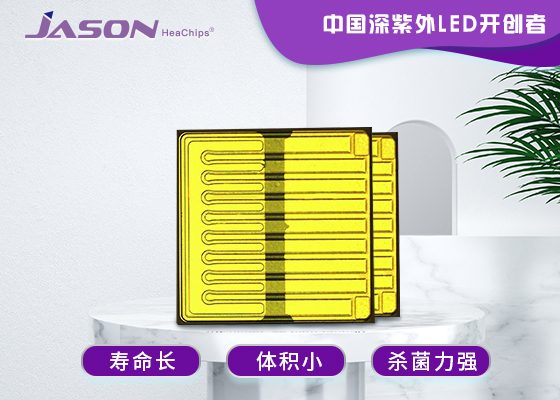
The integration setting
The catalogue's connection to this field is one published fact: its wavelength keywords attach phototherapy to the 310 nm band. The catalogue itself records nothing about the finished equipment built around that band — its design, its validation and its clearance belong to the equipment maker, as the boundary section below states. The LED supplied for it is a component. The component conversation is therefore narrow: which form the 310 nm band is supplied in, and what spectral data is recorded for the named model, established in the enquiry exchange.
What an enquiry states
- Spectral window: the centre wavelength and tolerance the treatment field must hold, stated numerically by the equipment maker in the enquiry as an input the component is confirmed against.
- Field uniformity: the per-device output consistency and binning the design requires, stated in the enquiry.
- Session duty: the duty the device will run — its cycling pattern and cumulative hours — stated by the equipment maker in the enquiry as an input the component is confirmed against.
- Drive and thermal design: the emitter array's drive architecture and its thermal path inside a clinical enclosure.
- Documentation for the validation file: which spectral and electrical data is recorded for the named model, named at enquiry stage so the file's requirements are settled early.
Where the component supplier's part ends
Stated plainly, because this field requires it: the catalogue supplies LED components. It does not supply finished medical devices, dosing programmes or clinical evidence, and it makes no therapeutic claims for components. Efficacy, safety cases and clearance belong to the finished device and its manufacturer's validation. What the component exchange can confirm is the emitter itself — the form in which the 310 nm band is supplied, and what spectral and electrical ratings are recorded for the named model — and that confirmation is given per model, in the enquiry exchange.
Starting the conversation
Send the target spectral window and tolerance, the intended package format or array architecture, the session duty the device will run and the programme volume.
Array design is the device maker's core decision
Emitter count and spacing, the drive architecture and the thermal path are the device maker's design decisions. State the array architecture, the session duty and the programme volume in the enquiry, and confirm the component against them: what spectral and electrical data is recorded for the named model is established per model in the enquiry exchange.
Can components be supplied for a device still in development?
State the development stage in the first message, and ask whether evaluation quantities can be supplied through the enquiry route against the named band and specification.
The 310 nm record
The company's published wavelength keywords attach phototherapy to the 310 nm band. The catalogue's chip range runs 255–340 nm, with the main production bands at 260–320 nm; the 310 nm band sits inside both spans. The catalogue supplies LED components for that band; which form the band is supplied in, and what spectral and electrical ratings are recorded for the named model, are established per model in the enquiry exchange.
Request a quotation
Tell us the wavelength, package format and quantity you are sourcing. Minimum order quantities and lead times are confirmed per product line in the quotation, against the named model and the quantities the enquiry states.
Send an Enquiry